
Molecular Dynamics Simulations
Watching proteins and ligands move—so binding hypotheses survive real motion.
At BioRacc
Computation in service of human health
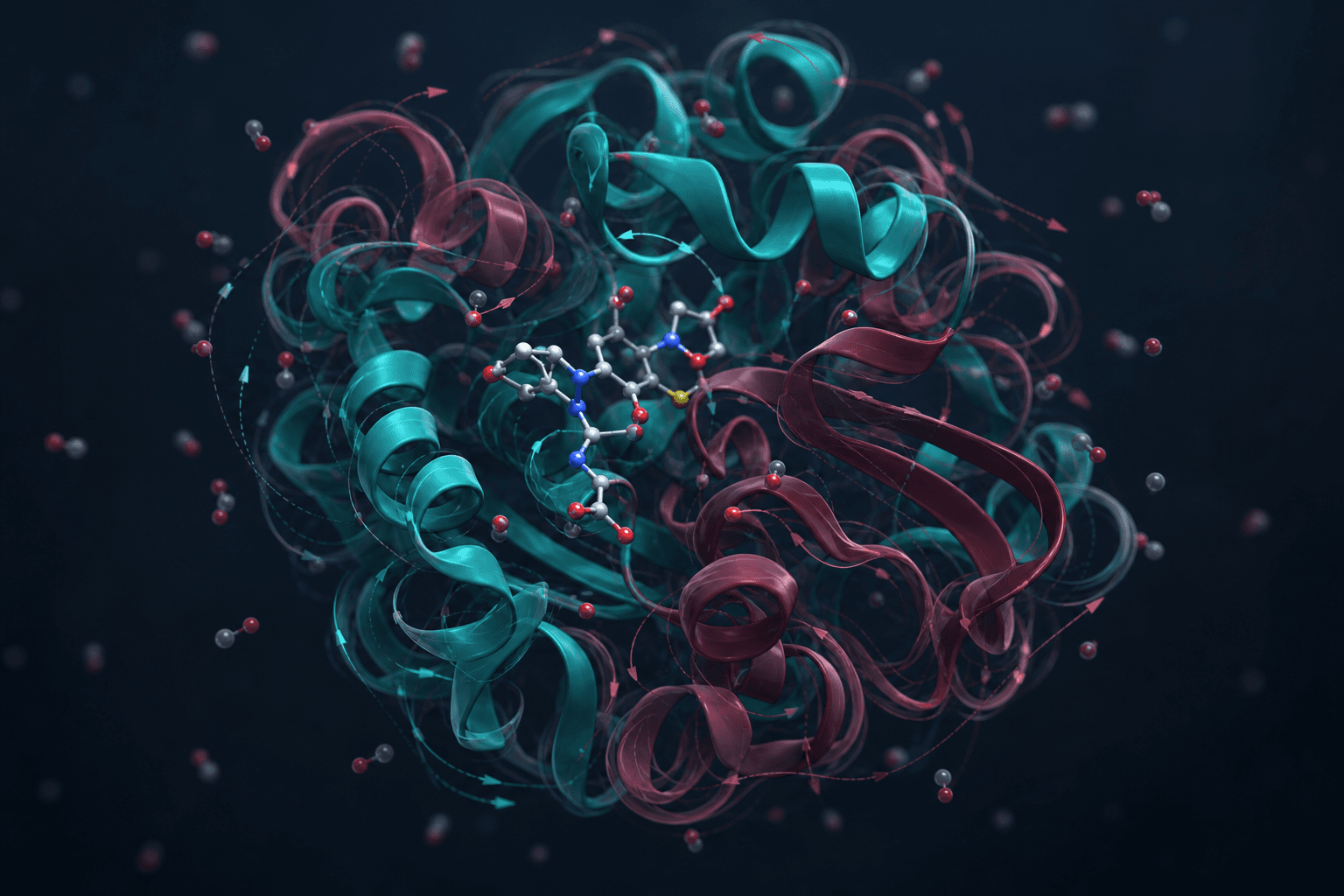
Static docking poses are a starting point, not the whole story. Molecular dynamics (MD) simulations at BioRacc let us observe how protein–ligand complexes flex, breathe, and rearrange—revealing stability, escape routes, and interaction patterns that static models miss.
Approaches
Methods you will see in practice
- Protein–ligand and protein–protein trajectory analysis
- Stability assessment of docking poses under thermal motion
- Mutation and resistance scenario exploration
- Integration with docking and virtual screening pipelines
Related capabilities
Continue exploring
Drug Discovery
From target hypothesis to prioritized candidates for infectious disease.
Read moreGenomic Bioinformatics
Turning sequence and variation data into clearer decisions for discovery.
Read moreAI & Statistical Methods
Models and pipelines that turn complex biomedical data into clearer decisions.
Read moreSmall-Molecule Optimization
Improving potency and reducing liabilities through iterative design.
Read more
Get involved
Ready to take the next step?
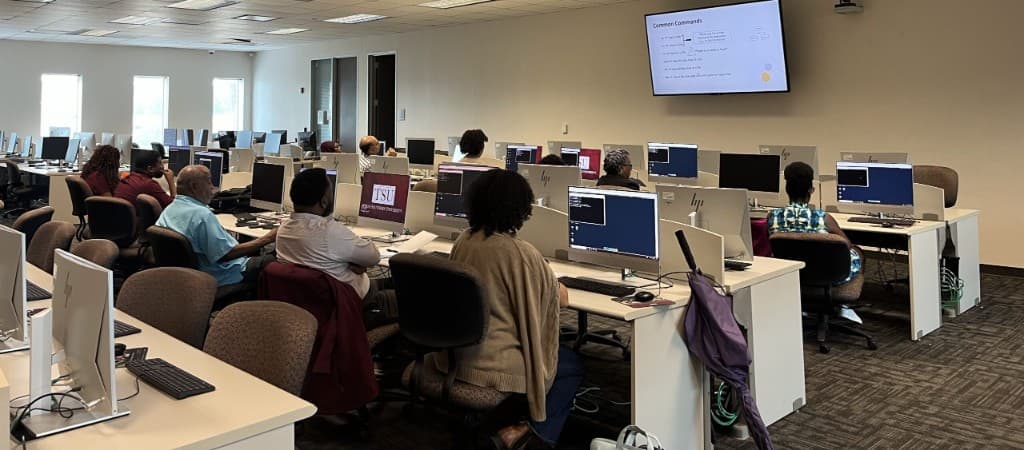
Whether you are a TSU student, graduate trainee, or faculty collaborator—choose the path that fits and contact the right person.
Open to Texas Southern University students, faculty, and collaborators.